
Understanding the Challenges of Bonded Labor in Pakistan

Updated: 4 days ago
For families affected by bonded labor in Pakistan, hard work does not always lead to greater security. Debt can restrict their choices, while children face barriers to education and parents struggle to provide for daily needs. At Bright Hope Ministries, our response begins with knowing families personally, listening to their concerns, and supporting them through education, practical care, and the love of Jesus Christ.
What Is Bonded Labor?
Bonded labor, also called debt bondage, involves debt being used to compel a person or family to keep working. In brick kiln communities, an advance against earnings is often called peshgi. When workers cannot freely leave, debt and employment become a means of control. Poverty alone is not the same as bonded labor; the use of debt to restrict freedom is central to understanding the problem.
Low earnings, unclear accounts, deductions, and repeated borrowing for essential expenses can make debts difficult to reduce. Restrictions tied to those debts may affect an entire household. An ILO-published study of Pakistan’s brick kilns documents how advances, household labor, and limited employment choices can reinforce this dependence.
Why Families Face Barriers to Change
Children may miss lessons when family survival depends on their work. Interrupted schooling can limit later opportunities. Women can face additional risks of discrimination and abuse. Families also need access to fair wages, safe working conditions, and support they can trust.
Pakistan’s Bonded Labour System (Abolition) Act dates to 1992, and provinces have additional relevant legislation. Yet legal prohibition and effective protection are different things. A November 2025 UK Parliament briefing describes continuing gaps in enforcement and assistance, alongside heightened risks for religious and ethnic minorities.
Families should be heard as people with abilities, relationships, and hopes for the future. Their circumstances must never become a reason to treat them as less worthy of respect.

How Bright Hope Ministries Responds
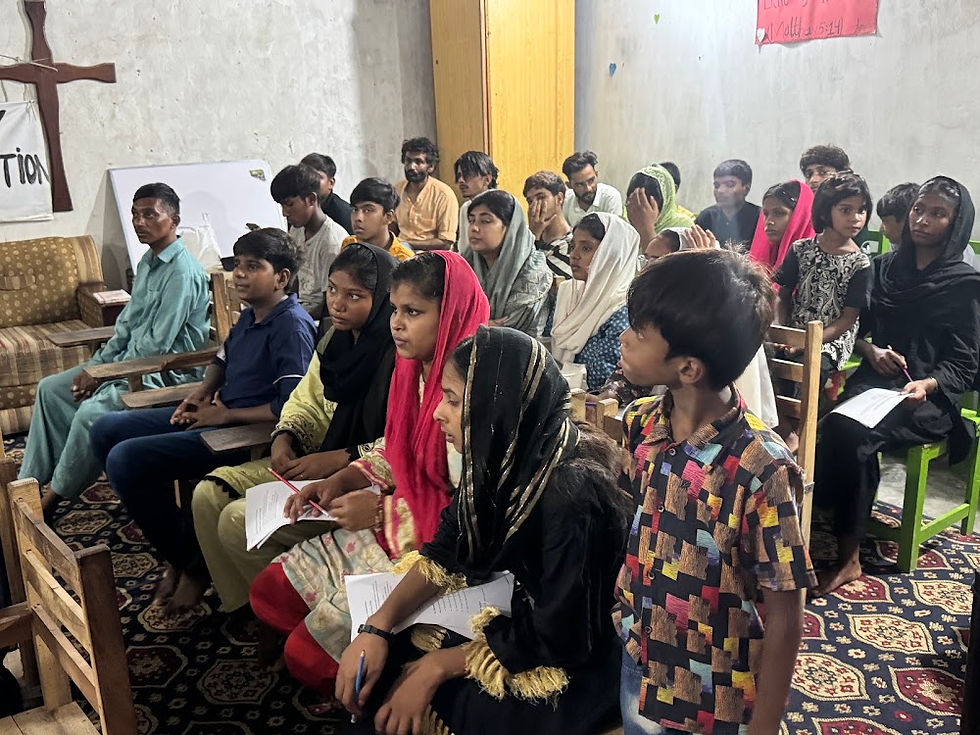
Our ministry serves brick kiln communities through regular visits, Gospel outreach, and practical support. We share Scripture, pray with families, and seek to respond to needs as resources allow. Our faith calls us to love our neighbors and uphold the dignity of every person.
Education is a central part of this commitment. Bright Hope Ministries runs two informal brick kiln schools and a formal school at Azad Town. These learning opportunities help children build literacy, confidence, and a foundation for further education.

A child attending school is an important step forward, but education alone does not end a family’s debt bondage. Lasting change also requires effective protection of workers’ rights, access to justice, and viable ways to support a household. Our education and care programs contribute to that wider effort; they are not a substitute for it.

Stand With Children and Families
You can help by praying for children, parents, teachers, and outreach workers; supporting our education and practical care programs; and sharing accurate information about bonded labor. Churches and partners can also encourage this work through consistent relationships with our ministry.
Your gift can help sustain Bright Hope Ministries’ service to vulnerable communities. We invite you to support the work and walk alongside families as they seek a more secure future.
Restoring hope. Building futures. Sharing the love of Christ.


Comments